People ask why the mackerel comes in a tin and not a jar. A jar looks nicer, and you can see what you are buying. We tried glass for the first batch in 2019 and stopped after one summer. The reasons were all boring.
Light spoils oil. Fish packed in oil and left on a shelf in the light goes rancid faster than you expect, and rancid olive oil tastes like crayons. A jar of mackerel on a shop shelf under a strip light is losing its flavour every day. In a tin, nothing gets in. The oil you open is the oil that went in.
Air is the other problem. Tins are sealed by crimping the lid onto the body in a double seam, and then the sealed tin is heated, which cooks the fish and sterilises everything in one go. There is no headspace to oxidise and no rubber seal to fail. A tin of mackerel packed this June will be as good in five years as it is now, and in some ways better, as the fish and the oil settle into each other. People who know tinned fish keep a few back for years, and turn them over every season.
Packed the same day
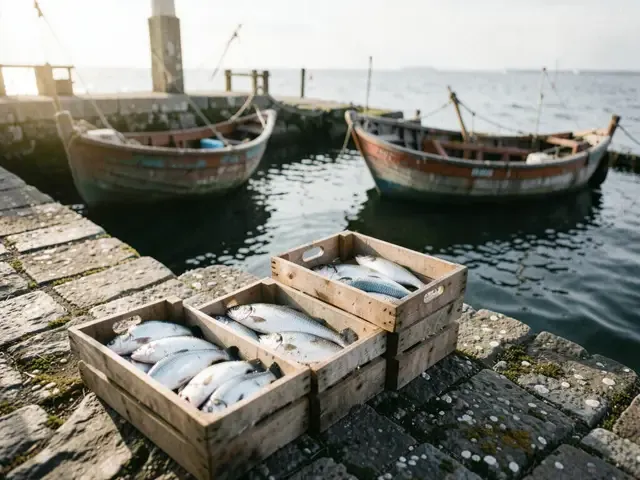
Dunya’s boat goes out of Port Ness at about two in the morning and brings the line-caught mackerel back at four in the afternoon. By nine that evening they are in the tins. The fish is filleted by hand at the harbour cannery, a small shed with three people in it, packed with a bay leaf and a few peppercorns, topped with olive oil, and sealed. That is the day on the label: 12 June this year.
We pack mackerel only in June, when the shoals are close to shore and the fish are fat. Later in summer they are leaner and move further out. We could buy frozen fish and pack all year, and some people do. We don’t.
Packaging that comes back
The tin is steel with a thin tin coating, and it is recyclable at every kerbside collection in the country, which glass with a metal lid is not always. We use a small paper wrapper printed in one ink, and nothing else. No box, no plastic, no foil.
We also take the tins back. If you bring empty ones to any of our stockists, they go into a crate that returns to the harbour, and they are washed, checked and used again. We reuse about a third. The rest are too dented, which is a good sign that people carry them around.
Last, a tin is a good thing to take on a picnic. You can open it with the ring, there is nothing to break, and you don’t need a fork if you have bread. Open it carefully, because the oil is full to the brim. Tilt the tin over the bread and let the oil go on first.